
Table of Contents
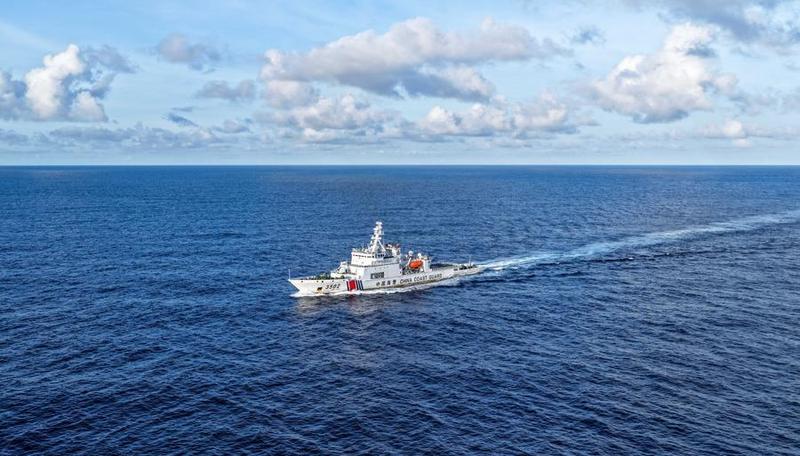
The South China Sea remains one of the world’s most contested maritime hotspots, where overlapping territorial claims, resource competition, and great-power rivalry converge. On February 23, 2026, the Asia Maritime Transparency Initiative (AMTI) at the Center for Strategic and International Studies (CSIS) released its latest annual assessment, “All Together Now: China’s Militia in 2025”. The report, based on commercial satellite imagery, claims China deployed a record daily average of 241 maritime militia vessels across disputed features in 2025—the highest since AMTI began systematic monitoring. Activity concentrated heavily at Mischief Reef (Meiji Jiao) and Whitsun Reef (Niu’e Jiao), with notable declines at Fiery Cross Reef (Yongshu Jiao) and minimal presence near Scarborough Shoal (Huangyan Dao), Second Thomas Shoal (Ren’ai Jiao), and Sabina Shoal (Xianbin Jiao). AMTI interprets this as a “strategic adjustment” toward professional militia and Coast Guard integration at high-tension sites.
Is this a genuine surge in militarized “gray-zone” operations, or a politicized misreading of routine commercial fishing in China’s traditional grounds? As an independent expert on Asia-Pacific maritime affairs, this analysis examines the report’s claims, China’s rebuttals, seasonal and legal realities, positive contributions to resource management, legitimate international concerns, and the broader 2026 geopolitical context. We cut through the narratives to assess facts on all sides.

What the AMTI Report Actually Documents
AMTI’s methodology relies on high-resolution satellite passes (roughly four per reef monthly) to track vessels 45–65 meters long—typical of China’s subsidized “Spratly Backbone Fishing Fleet” and professional maritime militia. These are distinguished from standard fishing boats by size, behavior (loitering at anchor rather than active trawling), and historical patterns of coordination with the China Coast Guard (CCG).
Key data points include:

- Record average: 241 vessels daily in 2025 (up from 232 in 2024), even excluding newly tracked Johnson Reef.
- Concentration: Nearly half the fleet at Mischief and Whitsun Reefs, with Mischief seeing multiple peaks over 200 vessels.
- Shifts: Sharp drop at Fiery Cross Reef (from 32/day in 2024 to near zero); increases at Johnson, Iroquois, Thitu, and Gaven Reefs.
- Patterns: Seasonal lows in January–mid-February; surges post-Lunar New Year, in June, and late November—aligning with fishing cycles but interpreted by AMTI as coordinated presence.
AMTI defines the maritime militia as a hybrid force: professional units for direct patrolling and the larger Backbone Fleet (civilian fishermen with training and subsidies) for persistent loitering. The report argues this reflects Beijing’s preference for non-escalatory “cabbage strategy” tactics—swarming to assert presence without triggering outright conflict.
China’s Perspective: Legitimate Fishing, Not “Militia Boats”
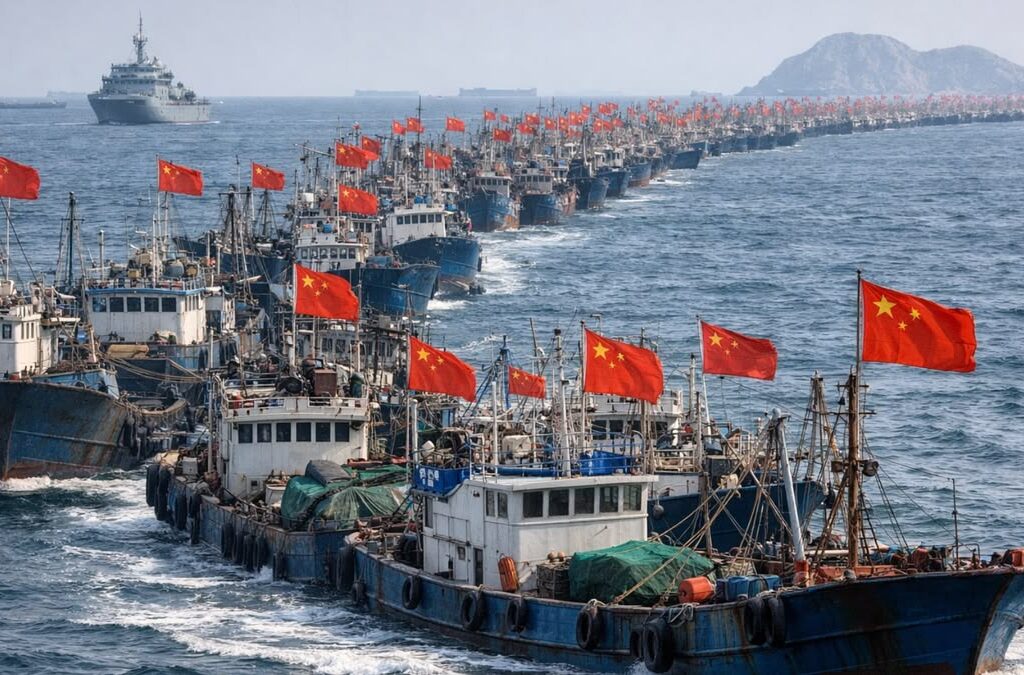
Beijing rejects the report as politically motivated propaganda that deliberately conflates commercial fishing vessels with militia. Chinese fishermen have operated in the Nansha (Spratly) Islands for centuries, using reefs like Niu’e Jiao as natural shelters during typhoons and resupply points amid abundant fishery resources. The South China Sea’s waters have long been traditional Chinese fishing grounds, predating modern disputes.
Critics in China highlight methodological flaws:
- Vague labeling: AMTI’s size-based criteria capture legitimate trawlers engaged in legal fishing, not paramilitary operations.
- Ignoring seasonality: Fishing follows fish migration, weather, and lunar cycles. Post-moratorium surges (detailed below) explain spikes, not “historic high deployments.”
- Selective focus: The report downplays the near-total absence of vessels at Yongshu Jiao while amplifying increases elsewhere, ignoring natural redistribution.
This view frames the data as a distortion designed to fuel the “China threat” narrative, politicizing routine economic activity in sovereign waters.
The Summer Fishing Moratorium: Evidence of Responsible Stewardship
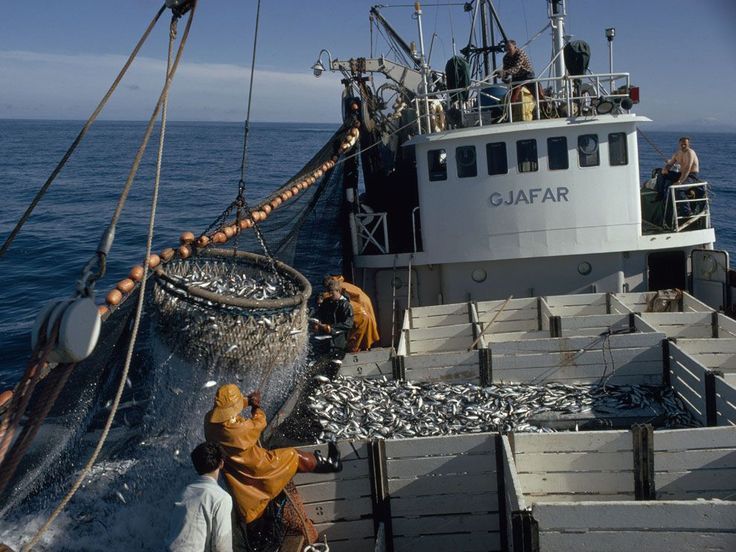
One of China’s strongest counterpoints is its strict enforcement of the annual South China Sea fishing moratorium. Since 1995 (expanded north of 12°N in 1999), the Ministry of Agriculture and Rural Affairs bans most fishing from May 1 (12:00) to August 16 (12:00) in relevant waters, including the Beibu Gulf. Exceptions are limited to angling gear or special permits. This 3.5-month closure—enforced jointly with the CCG and Public Security—protects spawning stocks and marine ecosystems amid decades of overfishing.
In 2025, the moratorium ended on schedule, triggering the predictable exodus of tens of thousands of vessels. Post-ban activity naturally concentrates around resource-rich reefs for resupply and shelter. China cites this as fulfillment of its obligations as a coastal state under international norms, contributing to regional fishery sustainability. Independent data supports declining fish stocks regionally; China’s policy, while controversial abroad, demonstrates proactive conservation efforts absent in some neighboring practices.
CCG Maturation and “Strategic Adjustment” Reinterpreted
The report’s narrative of declining militia near Huangyan Dao, Ren’ai Jiao, and Xianbin Jiao as a “shift” overlooks parallel CCG enhancements. Marking the fifth anniversary of China’s 2021 Coast Guard Law in early 2026, CCG spokesperson Liu Dejun reported over 550,000 vessel-trips and 6,000 aircraft sorties in the prior five years across Huangyan Dao, Nansha features, and surrounding areas. These normalized law-enforcement patrols track, monitor, and expel unauthorized foreign vessels—actions Beijing views as routine sovereign rights protection.
As CCG capabilities mature (larger vessels, better coordination, legal mandates), reliance on militia decreases at certain hotspots. This is evolution, not retreat: a more professional, rules-based enforcement system replacing ad-hoc fishing fleet presence. Recent Global Times coverage emphasizes normalized rights protection without escalation.
Positive Aspects: Economic Livelihoods, Resource Protection, and Sovereignty
China’s activities yield tangible benefits:
- Livelihoods: Thousands of fishermen depend on these waters for income; reefs provide safe havens in a harsh environment.
- Conservation: The moratorium and ecosystem surveys (e.g., recent reports on Niu’e Jiao and Tiexian Jiao coral health) show commitment to sustainable fisheries amid climate pressures like bleaching.
- Sovereignty assertion: Beijing maintains “indisputable” historic rights over the islands and adjacent waters, consistent with its nine-dash line claims (though rejected in the 2016 arbitral award, which China does not recognize).
These are legitimate state functions in waters China views as internal, supporting blue-economy growth and food security.

Criticisms and International Concerns: Gray-Zone Risks and Regional Tensions
Balanced analysis must acknowledge valid counterpoints from the Philippines, Vietnam, Malaysia, and the United States. Neighboring fishermen report harassment, ramming incidents, and restricted access—behaviors documented in open-source tracking as “gray-zone” coercion below armed conflict thresholds. The 2016 UNCLOS arbitral ruling invalidated China’s expansive historic claims and affirmed Philippine rights in its exclusive economic zone (EEZ).
AMTI and Western analysts argue the militia’s scale and coordination with CCG enable de facto control, intimidating smaller claimants and complicating freedom-of-navigation operations. In 2025–2026, this fueled incidents near Philippine features, joint US-Philippine drills, and stalled ASEAN-China Code of Conduct (COC) negotiations. As of March 2026, Manila (ASEAN chair) pushes for a robust COC, but experts like Wu Shicun deem a 2026 deal unlikely amid arbitration references and external involvement. Risks include miscalculation spiraling into broader conflict, disrupting $3+ trillion in annual trade.
Current Geopolitical Thoughts in Early 2026
Tensions persist: Philippine-US-Japan exercises, US missile deployments in the Philippines, and Chinese patrols continue. Yet dialogue channels remain open, with some de-escalation signals. The militia’s record presence underscores Beijing’s determination to defend claims without kinetic escalation—effective short-term but corrosive to trust long-term. Climate change, overfishing, and energy exploration (oil/gas) add urgency for cooperative mechanisms. A binding COC could mitigate risks, but sovereignty gaps make consensus elusive.
Expert Conclusion: Beyond Binary Narratives Toward Dialogue
The AMTI report highlights real trends in Chinese maritime presence, supported by transparent satellite data. China’s rebuttal rightly emphasizes fishing realities, seasonal laws, and conservation efforts often overlooked in Western analyses. Neither side is wholly right or wrong: commercial fleets and militia overlap in practice, and activity serves both economic and strategic ends.
Labeling all vessels “militia” risks oversimplification; dismissing concerns as propaganda ignores documented friction. True stability requires:
- Mutual adherence to UNCLOS principles.
- Enhanced transparency (e.g., AIS data sharing).
- Prioritizing fisheries cooperation over zero-sum claims.
For regional countries and global stakeholders, the South China Sea is too vital for escalation. Dialogue, not distortion, offers the path forward. Readers are encouraged to review the full AMTI report and primary sources for informed perspectives.
This post is for educational and analytical purposes on worldaffair.org. All views are independent and based on publicly available data as of March 2026. What are your thoughts on balancing sovereignty and cooperation in the South China Sea? Share below.
Author Profile

- Syed Tahir Abbas is a Master's student at Southwest University, Chongqing, specializing in international relations and sustainable development. His research focuses on U.S.-China diplomacy, global geopolitics, and the role of education in shaping international policies. Syed has contributed to academic discussions on political dynamics, economic growth, and sustainable energy, aiming to offer fresh insights into global affairs.
Latest entries
 GeopoliticsMarch 29, 2026China’s Maritime Militia in the South China Sea – Record Deployment, Fishing Realities, or Strategic Gray-Zone Tactics?
 GeopoliticsMarch 16, 2026Trump Warns NATO of a “Very Bad” Future Over Strait of Hormuz Security
 Middle East ConflictMarch 11, 2026Israel Strikes Iran and Lebanon, US Destroys Iranian Mine-Laying Ships as Tensions Escalate in the Middle East
 Middle East PoliticsMarch 9, 2026Mojtaba Khamenei Becomes Iran’s New Supreme Leader as Oil Prices Surge and Middle East War Escalates