

Table of Contents
China is undergoing one of the fastest demographic transformations in modern history. In 2022, China’s population shrank for the first time since the Great Leap Forward famine of 1959–1961. With one of the world’s lowest fertility rates and accelerating population decline, China is projected to lose up to 250 million people by 2050 — nearly three-quarters of the entire current U.S. population.
This is not just a numbers problem. China’s population is aging at an unprecedented speed while the country remains a middle-income nation. Fewer workers, more retirees, strained pensions, and shrinking military recruitment pools are creating profound challenges for China’s economic growth, social stability, and national security.
This in-depth analysis explores every aspect of China’s aging population crisis, its root causes, security implications, and the policy options Beijing is considering. Updated with the latest 2024 United Nations World Population Prospects data, this article is essential reading for understanding how demographics will reshape China’s future — and the world order.

The Scale of China’s Demographic Upheaval: Population Decline by 2050
China’s total population peaked around 2022 and is now in irreversible decline. By 2050, the country could see its population drop from 1.4 billion (as of 2026) to roughly 1.15 billion under moderate projections — or even lower under pessimistic scenarios.

Figure 1: Total Population in China, Japan, India, and the United States (1950–2050)
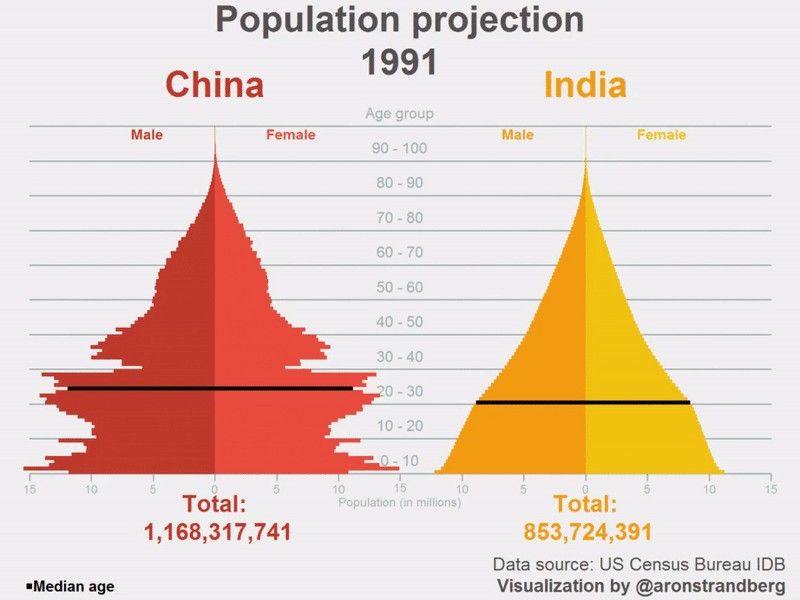
- India (yellow line): Steady rise, overtaking China around 2025 and reaching ~1.7 billion by 2050.
- China (red line): Sharp growth until ~2025, then decline (solid, dashed moderate, and dotted “China low” scenarios).
- United States (blue line): Steady increase to ~350 million by 2050.
- Japan (light blue line): Peak around 2005, now declining toward ~100 million.
Source: United Nations Department of Economic and Social Affairs, Population Division, 2024 Revision of World Population Prospects.
This reversal ends decades of demographic dividend that powered China’s economic miracle. The real crisis, however, lies in the speed of aging.
China Is Getting Old Before It Gets Rich
Unlike the United States and Japan, which became wealthy before their populations aged, China faces the opposite challenge: it is getting old before it gets rich.
Figure 2: GDP per Capita vs. Share of Population Aged 65+ (2023, Top 30 GDP per Capita Countries)
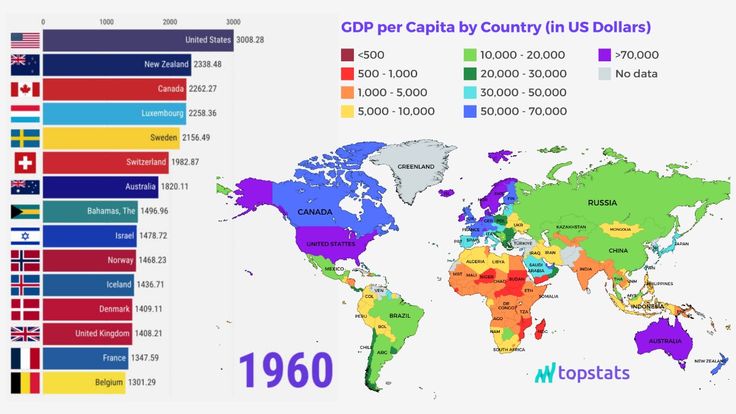
- India: ~$14,005 GDP per capita, ~7% aged 65+.
- China: ~$15,000 GDP per capita, 14% aged 65+.
- United States: ~$80,000 GDP per capita, ~17% aged 65+.
- Japan: ~$45,000 GDP per capita, 36% aged 65+.
China’s working-age population peaked in 2015 and has been shrinking ever since. By 2050, there will be fewer than two working-age adults for every person aged 65 and older — compared to more than 2.5 in the United States. This threatens pension systems, healthcare, economic growth, and military readiness.
How China Reached This Demographic Crisis: Fertility Decline and Policy Failures
China’s fertility rate began falling in the 1960s — well before the famous one-child policy. By 1990, it had already dropped below the replacement level of 2.1 children per woman.
Figure 3: China’s Total Fertility Rate and Major Population Policies (1950–2050)
Key milestones:
- 1971: “Later, Longer, Fewer” campaign
- 1980: One-child policy (with fines and exemptions)
- 2001: Rural relaxation
- 2016: Two-child policy
- 2021: Three-child policy + incentives
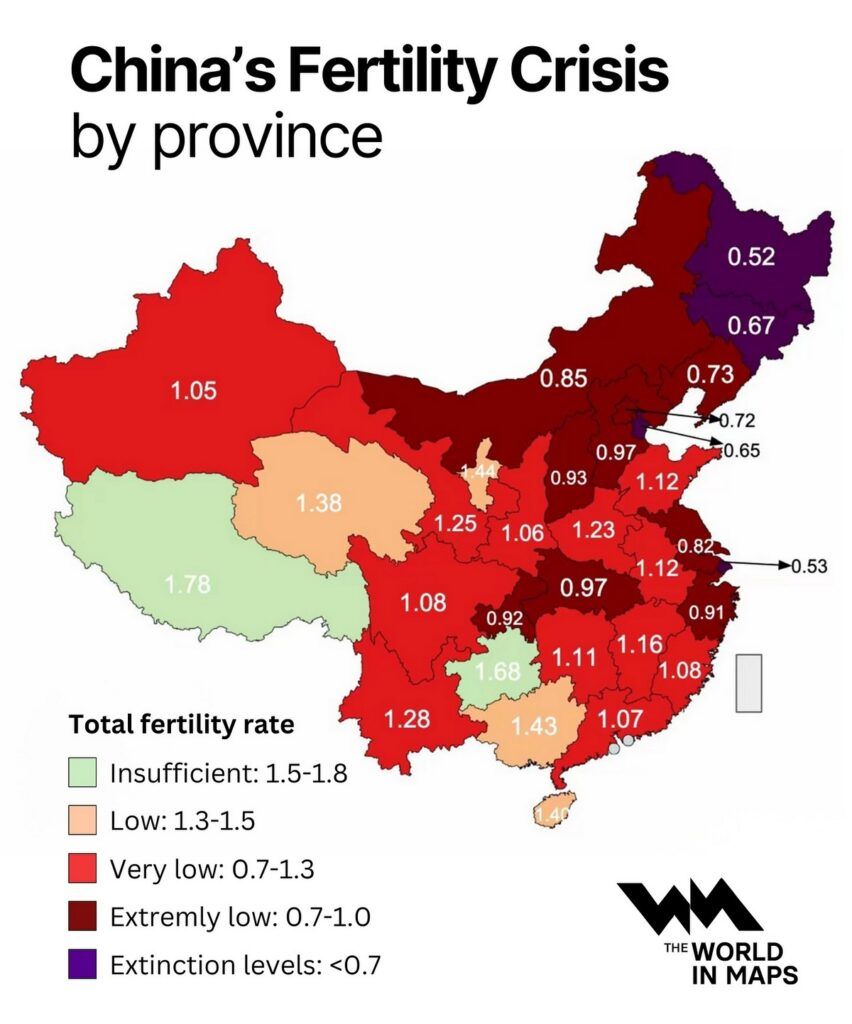
Despite relaxing restrictions, fertility has stagnated at 1.0–1.2 children per woman. Even aggressive pronatalist measures have failed to reverse the trend. High child-rearing costs (second-highest in the world), youth unemployment, and shifting cultural values among young Chinese are major barriers.
The Evolution of China’s Population Policies The Chinese Communist Party (CCP) has shifted from strict limits to heavy encouragement, but results remain disappointing.
Visualizing China’s Aging Population: From Pyramid to Inverted Structure
Figure 4: Population Pyramids for China – 2020 vs. 2050
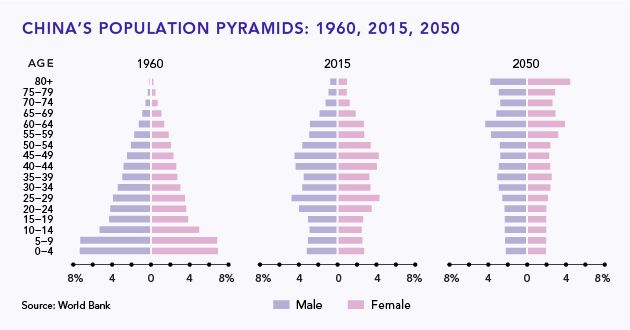
- 2020: Still relatively youthful base, strong working-age cohort (30–54).
- 2050: Inverted pyramid — nearly one-third of the population aged 65+, dramatically shrunken youth cohorts (0–29).
Figure 5: Population Aged 65+ Relative to Working-Age Population (2000–2050)
By 2050, China’s old-age dependency ratio will approach Japan’s levels, far exceeding the United States and India.
National Security Implications of China’s Aging Population
An aging society directly threatens three pillars of Chinese security:
1. Military Security
A shrinking pool of young recruits challenges the People’s Liberation Army (PLA). Advanced technology, robotics, and alliances (e.g., with Russia and Iran) can partially offset this, but long-term force size remains a concern.
2. Structural Security
- Rising pension and healthcare costs
- Fewer workers funding social insurance programs
- Negative economic effects and reduced innovation capacity
- Persistent high youth unemployment and labor disengagement
Government finances will face severe pressure. Funding military modernization and elder care may force difficult trade-offs.

3. Regime Security
The CCP must simultaneously support a massive elderly population while meeting the aspirations of frustrated young citizens. Failure to deliver on social welfare could erode public trust and CCP legitimacy — a core regime security risk.
How China Might Respond: Policy Options and Challenges
China is exploring multiple strategies. Here is a detailed assessment:
Table 1: Assessing Policy Approaches to China’s Aging Population Crisis
| Policy Lever | Viability | Positive Considerations | Negative Considerations |
|---|---|---|---|
| Pro-birth policies | Unlikely sufficient | CCP has strong social influence | High child costs; policies only shift timing, not total births |
| Immigration | Not viable | Targeted workers (e.g., caregivers) possible | Net out-migration history; population too large for impact |
| Rural-urban divide | Possible impact | Boosts growth via urbanization; hukou reform | Urbanization largely complete; rural population already older |
| Technology & robotics | Possible impact | Replaces manpower in military & economy | Short-term unemployment spike |
| Increasing retirement age | Possible impact | Extends pension viability; lowers dependency | Unpopular; may worsen youth unemployment |
Key Policy Details:
- Pronatalist Policies & Family Support New 2024 State Council directives offer childbirth subsidies, childcare, housing, and education support. Cultural campaigns (e.g., updating the Wuhan family sculpture to show three children) aim to normalize larger families.[Insert Figure 6 Image Here] Alt text: Public sculpture of family with three children in Wuhan, China – pronatalist policy example
- Immigration Largely unrealistic due to scale and restrictive policies, but selective foreign caregivers may be allowed.
- Addressing the Rural-Urban Divide China’s urbanization rate (~65%) still lags developed nations. Relaxing the hukou (household registration) system — hinted at in 2025 policy shifts — could unlock economic potential. However, satellite data suggests urbanization is already largely complete, and rural residents are older on average.Figure 7: Percentage of Urbanized Population (1950–2050) [Insert Line Chart Image Here – Alt text: China urbanization rate growth compared to India, USA, and Japan]
- Harnessing Technology Robotics and AI can reduce labor needs in both military and civilian sectors.
- Raising Retirement Age From 2025 onward, China is gradually increasing retirement age (men to 63, women to 58 by 2040). This is unpopular but necessary to ease pension burdens.
Conclusion: A Global Challenge with Far-Reaching Consequences
China’s unique position — aging rapidly without high-income status — will reshape its economic trajectory, military posture, and domestic stability. How Beijing responds will influence regional security in Asia, global supply chains, and international alliances.
For the rest of the world, China’s demographic crisis offers both risks (slower Chinese growth, potential instability) and opportunities (shifting global power dynamics toward younger nations like India).
This is one of the defining stories of the 21st century. As China’s workforce shrinks and financial pressures mount, the effects will be felt worldwide.
Author Profile

- Syed Tahir Abbas is a Master's student at Southwest University, Chongqing, specializing in international relations and sustainable development. His research focuses on U.S.-China diplomacy, global geopolitics, and the role of education in shaping international policies. Syed has contributed to academic discussions on political dynamics, economic growth, and sustainable energy, aiming to offer fresh insights into global affairs.
Latest entries
 GeopoliticsSeptember 21, 2026Xi-Trump Summit 2026: Can Managed Competition Survive the AI and Power Reality?
 GeopoliticsSeptember 7, 2026China’s New Front: Coast Guard Patrols East of Taiwan and the Quiet Expansion of Maritime Pressure in 2026
 Strategic AssessmentAugust 24, 2026The AI Choice Is Becoming Binary: Washington’s Push and Beijing’s Counter
 GeopoliticsJuly 28, 2026South China Sea Crisis Deepens: China-Philippines Standoff and the Future of Indo-Pacific Order

9 comments
ProDentim is a modern oral-health supplement formulated with specialized probiotics and naturally sourced ingredients to help maintain firm teeth
NerveCalm is a high-quality nutritional supplement crafted to promote nerve wellness, ease chronic discomfort, and boost everyday vitality.
PurDentix is a revolutionary oral health supplement designed to support strong teeth and healthy gums. It tackles a wide range of dental concerns, including gum inflammation and tooth decay
Backbiome is an advanced daily wellness supplement formulated to help support spinal comfort, reduce feelings of built-up tension, and promote freer, smoother movement throughout everyday life.
AquaSculpt is a high-quality metabolic support supplement created to help the body utilize fat more efficiently while maintaining steady
GL Pro is a natural dietary supplement formulated to help maintain steady, healthy blood sugar levels while easing persistent sugar cravings.
Boostaro is a modern mens wellness formula created to support daily vitality, stamina, and confidence through a practical, natural routine.
AquaSculpt is a high-quality metabolic support supplement created to help the body utilize fat more efficiently while maintaining steady
Backbiome is an advanced daily wellness supplement formulated to help support spinal comfort, reduce feelings of built-up tension, and promote freer, smoother movement throughout everyday life.